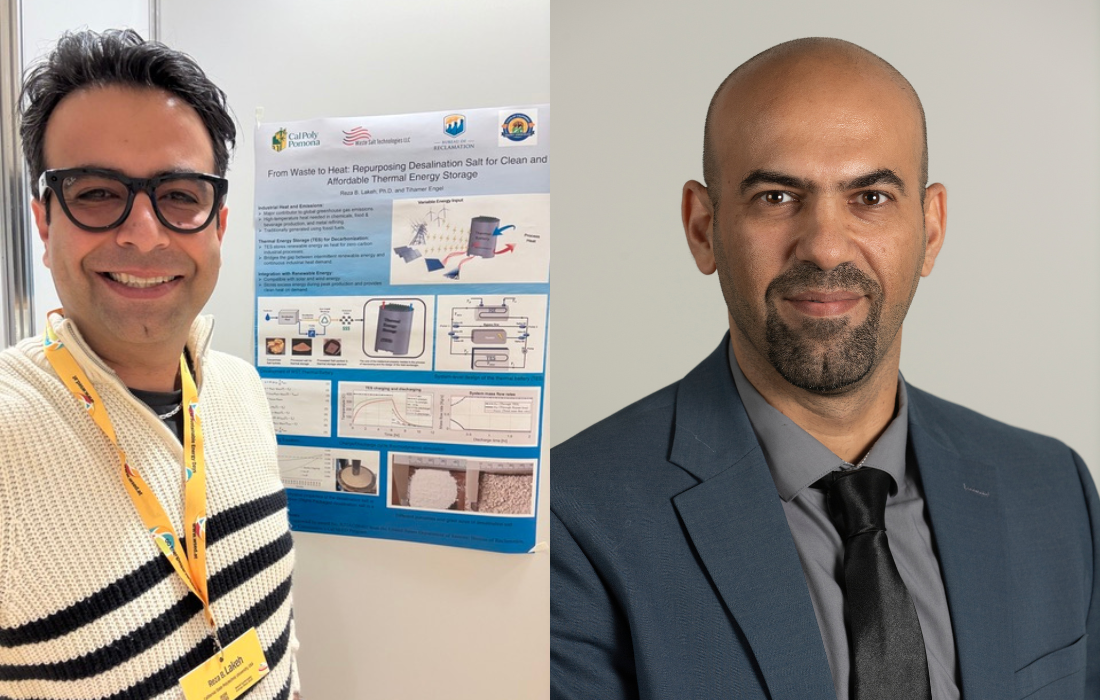
Two professors from Cal Poly Pomona are collaborating to create a thermal energy storage system aimed at enhancing food drying processes. Dr. Reza Lakeh, a professor of mechanical engineering, and Dr. Belal Hasan, an associate professor in the Department of Nutrition and Food Science, are working on this project with support from the CSU Growth in Undergraduate Innovation, Discovery, and Engagement (GUIDE) Initiative Award.
The focus of their research is on using renewable energy to generate heat, which can be stored and utilized later to dehydrate fresh produce. This interdisciplinary approach is designed to combine Lakeh’s expertise in renewable energy systems with Hasan’s knowledge of food processing. Hasan noted that merging these fields could provide deeper insights into the technological challenges they face.
Lakeh brings seven years of thermal energy storage research, including the use of desalination salt as a heat storage material, to the project. The current initiative aims to transition this theoretical research into practical applications such as food drying and cooling for data centers.
The project consists of two primary parts: an experimental food drying process supported by thermal energy storage and a system-level model for cooling data centers. The thermal energy storage system, often referred to as a “thermal battery,” will capture heat from renewable sources, allowing it to provide a consistent, fossil fuel-free heat source when required. "We generate heat, we provide the heat, but we don't burn any fuels," Lakeh explained.
Food drying is the main experimental focus, as removing moisture from food can significantly extend its shelf life—from days to over a year. The research team will analyze the system's energy efficiency, consumption, drying performance, and the quality of dehydrated products, specifically high-value fruits and vegetables commonly grown in California, noting variations in moisture content and drying characteristics.
Undergraduate students will have the opportunity to engage in laboratory demonstrations and modeling. Their work will include examining the application of stored thermal energy in drying systems and contributing to models that guide future developments. Students may also collaborate with produce from the university's Spadra Farm and visit local food manufacturers.
Hasan emphasized that faculty research support creates significant opportunities for students to gain practical experience. He expressed a shared vision for fostering student success and enhancing career readiness. Lakeh added that participation in meaningful research can help students stand out in the competitive job market.
The CSU GUIDE award serves as seed funding to help the professors generate initial experimental and modeling data, potentially facilitating larger future research proposals. The technology developed could create new revenue streams for California farmers through value-added products. The research team anticipates that this project will not only further their thermal energy storage investigations but also foster future research and collaboration opportunities within Cal Poly Pomona.